


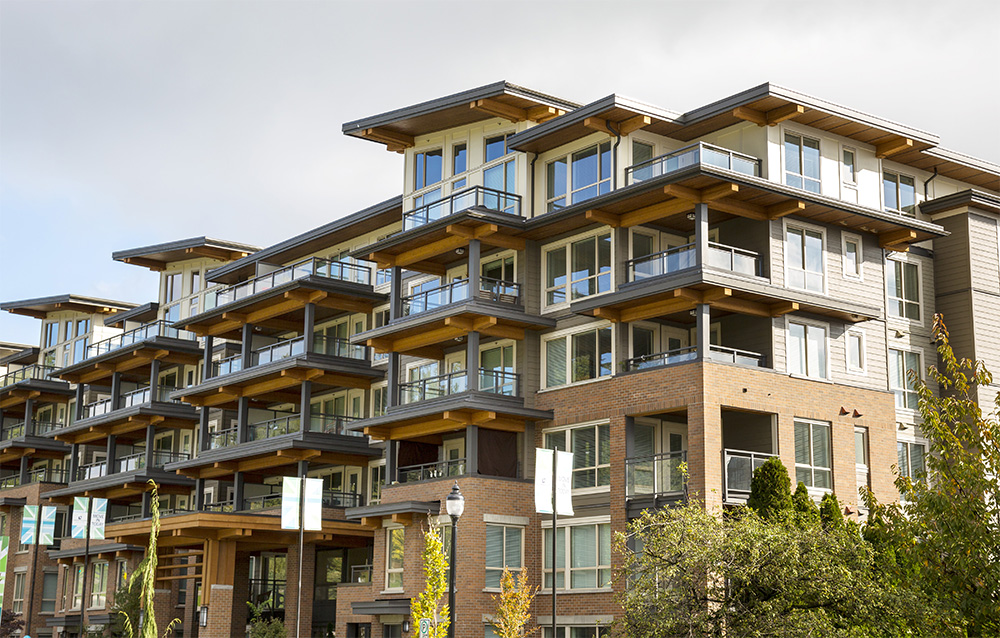

Midrise Timber Frame
Mass timber systems, including cross-laminated timber (CLT) and glue-laminated timber (glulam), allow larger, taller and more complex buildings to be constructed with wood. These engineered products combine structural strength, dimensional precision and design flexibility with the benefits of a renewable, low-carbon material.
Canada is advancing mass timber as part of a broader strategy to grow low-carbon construction and increase the use of value-added Canadian wood products. Through initiatives such as Green Construction through Wood, Canada has supported the use of wood in non-traditional construction, including tall and large-scale buildings. Demonstration projects such as the 18-storey Brock Commons Tallwood House at the University of British Columbia helped prove the potential of mass timber at scale and contributed to building code developments that now enable taller wood buildings in Canada. Mass timber also supports Canada’s housing and climate objectives, offering lower manufacturing greenhouse gas emissions than many conventional construction materials, long-term carbon storage, and the potential to reduce building embodied carbon when used with effective design strategies.
Canada’s leadership is further supported by a growing domestic manufacturing base for engineered wood products. Canadian producers manufacture a range of mass timber components, including CLT, glulam, nail-laminated timber (NLT), mass timber panels, beams and columns. Manufactured from Canadian lumber in controlled factory environments, these products offer high levels of precision, quality control and prefabrication before delivery to site. With manufacturing capacity across several provinces, Canada combines sustainable forest resources, technical expertise and advanced production methods to support mass timber projects at home and in international markets.